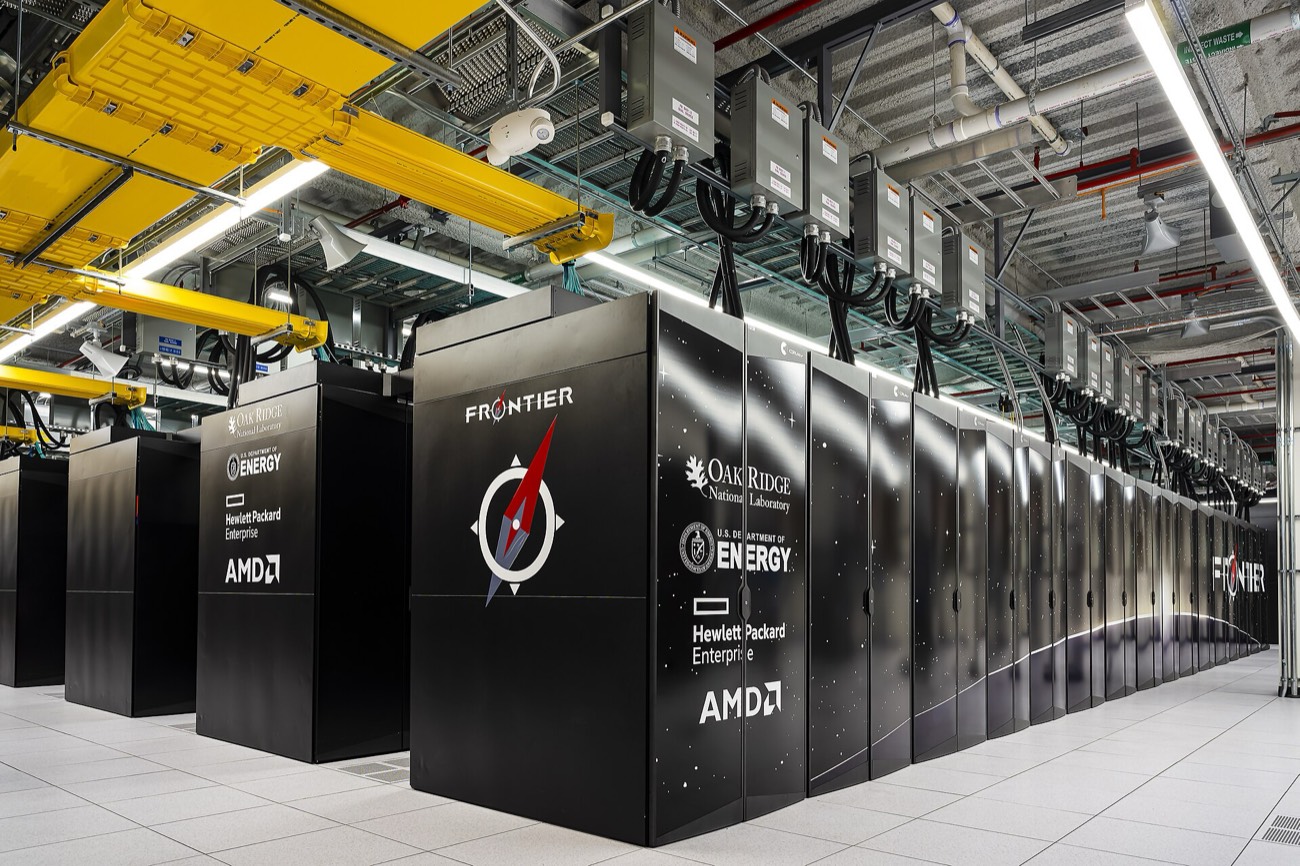
Five years ago a 20 kW rack was considered dense. Today AI training platforms routinely demand 100 kW and more per cabinet — and the cooling plant, not the IT load, has become the first line of the project plan.
Why air ran out of headroom
Air cooling scales with temperature delta and airflow, and both have practical ceilings: server fans that consume 10–15% of IT power, hot-aisle temperatures that exceed safe working limits, and raised floors that simply cannot move enough CFM past 40 kW per rack. Beyond that point, physics votes for liquid.
The three architectures that matter
| Approach | Density ceiling | Retrofit effort | Typical use |
|---|---|---|---|
| Rear-door heat exchangers | ~50 kW | Low | Bridging existing halls |
| Direct-to-chip (DLC) | 120–150 kW | Medium | AI / HPC clusters |
| Immersion | 200 kW+ | High | Purpose-built facilities |
Direct-to-chip has emerged as the pragmatic default for GPU clusters: cold plates on CPUs and GPUs capture 70–80% of heat into the loop, while the remaining share stays manageable for existing air systems.
The checklist owners forget
- Water quality and chemistry — glycol mix, biocides and filtration are operational disciplines, not commissioning checkboxes.
- Leak detection and drip trays at every quick-disconnect; insurers now ask for them.
- CDU redundancy — N+1 per row minimum; a single CDU failure must not take down a training run.
- Commissioning under load — thermal performance must be proven with resistive load banks before the GPUs arrive.
Treat the coolant loop like you treat the network: designed, monitored, and with a failure budget.
PEXON designs DLC-ready racks with Supermicro, Dell and Lenovo platforms, matched CDUs and manifolds, and delivers them as a tested unit — from loading dock to first token.